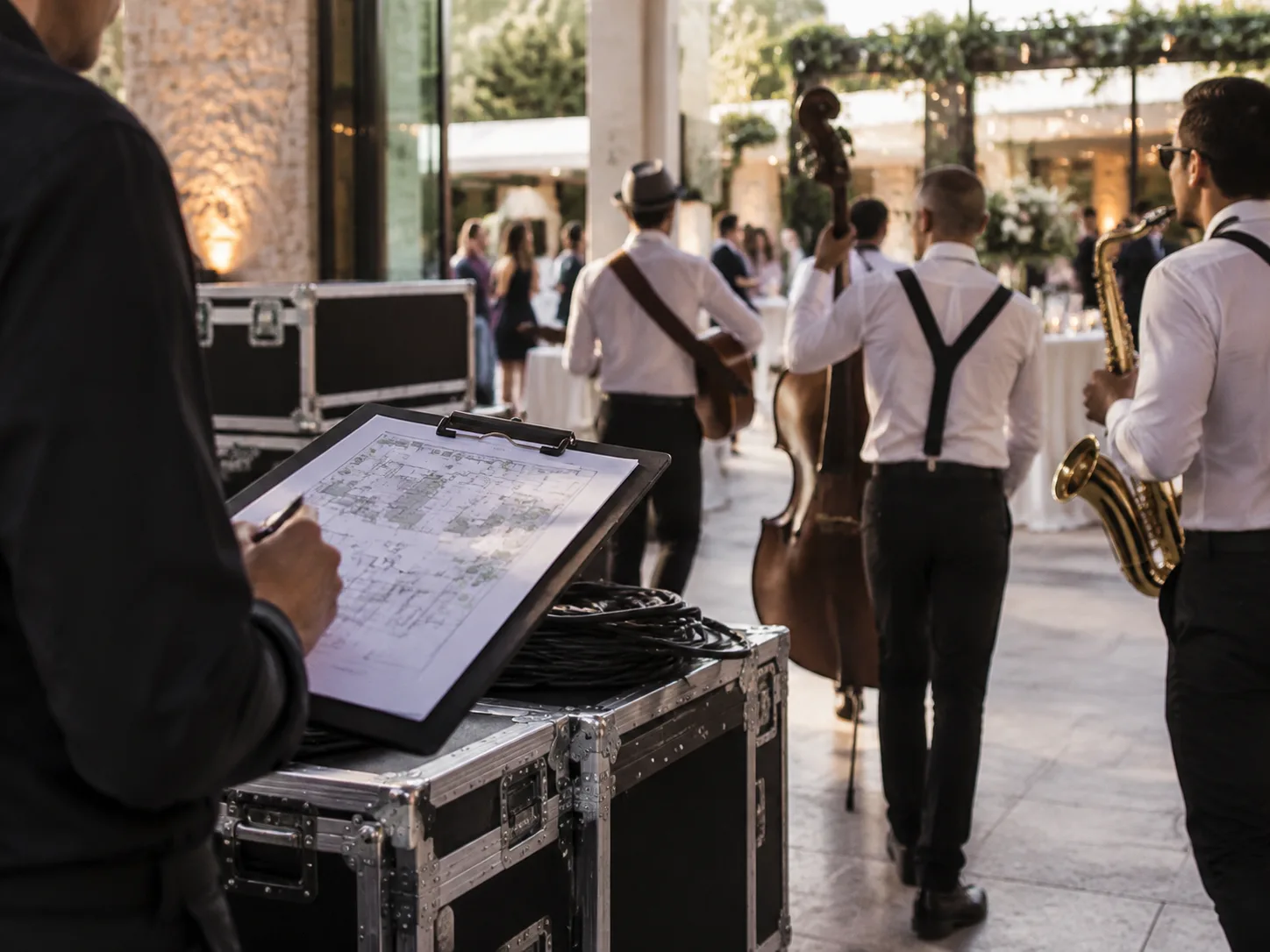
For most events, start contacting roaming bands 6–12 months in advance, and extend that window to 12–18 months for peak wedding dates, holiday periods, and destination events. Starting early gives you more time to compare styles, ask about availability directly, and find an interactive live band that fits the atmosphere of your wedding, private party, or corporate event. Smaller off-peak celebrations can often work with 4–8 weeks, but shorter timelines usually mean fewer choices, tighter logistics, and less flexibility.
This guide explains when to book a roaming band by season so you can plan around availability, travel needs, and last-minute risk without assuming any date is guaranteed.
How Seasonality Affects Roaming Band Availability
Roaming bands follow broader demand cycles that mirror the events industry: spring and summer wedding seasons, major holiday windows, and local festival peaks. Knowing these cycles helps you estimate the right booking window before availability becomes limited. Popular ensembles receive inquiries and tentative holds many months ahead; their calendars fill first for high-demand Saturdays and destination weekends. Beyond the sheer number of bookings, peak months also compress rehearsal time, soundcheck slots, and travel logistics for bands that frequently work regionally or internationally. If you need a specific stylistic match — a folk quartet, a New Orleans-style brass band, or a roaming DJ hybrid — that niche demand concentrates lead times further.
The earlier you begin your search, the easier it is to compare not only availability, but also the kind of guest interaction each band can create. For roaming bands, timing matters because the best fit is not just about a free date; it is about finding performers who can move naturally through the room, read the energy of the event, and adapt to the moments that matter most.
Peak Wedding Months: Recommended Booking Window
Peak wedding months (commonly late spring through early fall in many regions) are when you should be most proactive about securing music. For a Saturday wedding during a peak month, contact bands 10–14 months in advance if you want a wider choice of styles, ensemble sizes, and levels of guest interaction. Weekdays, Sundays, or off-peak hours sometimes require shorter notice. For destination weddings within peak months, add extra lead time to account for travel coordination, lodging for musicians, and any required travel permits or customs paperwork. The further ahead you can commit, the more likely a band can plan rehearsal, travel, and logistics directly with the band around your date.
Why peak demand increases required lead time
The most popular bands are often contracted by multiple planners and venues for peak dates, and they prioritize earlier inquiries. Once a roaming band books a marquee date, they may decline other requests for that weekend, effectively reducing the available pool. Additionally, venues often require vendor lists in advance and may limit simultaneous access to certain spaces for setup; that makes early booking of musical acts advantageous to secure placement in the event timeline. Finally, bands with complex staging needs or large ensembles require more planning time, making early planning a critical consideration for larger productions.
Holiday periods and special calendar windows
Holidays — such as New Year’s Eve, Christmas season parties, bank-holiday weekends, and national celebration days — create concentrated pockets of demand. Corporate events and private parties held around these windows attract many bands because of higher pay rates and festive programming opportunities. Expect availability to tighten and cancellation penalties to be stricter during these periods. For major holiday bookings, start the process 9–12 months ahead and confirm contracts and deposits early. If your event falls on a movable holiday (e.g., long weekends or religious observances), communicate dates clearly and early, as some bands avoid certain holiday slots due to family commitments.
Before committing, compare each band’s deposit, refund and rescheduling terms with a clear roaming band cancellation policy, and confirm the final terms directly in writing.
Examples of holiday lead-time differences
Compare New Year’s Eve to a mid-October Saturday. New Year’s Eve often requires nearly a year’s lead time because bands target high-fee market dates and coordinate multiple events on the same night. In contrast, an October date outside major local festivals may be booked 3–6 months ahead. If you plan a holiday event with unique requirements — themed repertoire, costuming, or additional performers — those components amplify the time needed to finalize arrangements, so err on the side of earlier contact.
Destination events and multi-location logistics
Destination weddings and events introduce logistical layers: travel arrangements, accommodation blocks for musicians, transport of instruments, customs paperwork for international travel, and coordination with local production teams. Those variables extend the planning horizon. For domestic destination events, contact bands 9–12 months in advance; for international destinations, start 12–18 months ahead, especially if visas, carnets for instruments, or airline instrument policies come into play. This is particularly true for roaming bands who travel with larger percussion sets, wind instruments, or amplified rigs that require advance airline or freight planning.
For destination events, Roaming Band can help you discover suitable profiles and start the conversation, but travel details, availability, fees, and performance terms should always be confirmed directly with the band. This keeps expectations clear and helps you compare options without assuming that any date, location, or setup is guaranteed. Review travel, accommodation, instrument transport and local access requirements early; this roaming band travel fees guide can help you identify hidden logistical costs before confirming your shortlist.
Booking Timelines for Destination Weddings and Events
When you factor flights, local transport, hotel room blocks, and potential extra personnel (road crew, local hires, interpreters), the booking window lengthens. For example, a brass ensemble booked to play at a three-day destination wedding in another country needs confirmed travel documents, which often means deposits and contracts earlier than a local gig. The recommended timing reflects not only the band’s calendar but also the time required for permits, local vendor coordination, and contingency planning for cross-border contingencies.
Shoulder seasons and off-peak months: more flexibility
Off-peak months and shoulder seasons generally allow more flexibility on when to book a roaming band. In many markets, late fall (excluding holidays) and winter months see lower demand; bands may accept bookings 6–12 weeks before an event. This window can be a chance to secure higher-tier acts at shorter notice and sometimes at better rates. However, do not confuse flexibility with zero risk: staffing issues, sudden weather events, or unexpected tours can still affect availability. For outdoor winter events there are also weather-related equipment and logistical concerns that should be discussed well in advance even if the musical booking timeline is shorter.
Last-Minute Booking Tips for Off-Peak Events
- Approach bands known to play off-season local circuits; they may have open dates and reduced travel needs.
- Consider local or regional bands to avoid travel complications and reduce the number of people who need accommodation.
- Keep repertoire expectations flexible to accommodate what a band can prepare quickly.
Last-minute risk: what “last minute” really means
Last-minute bookings — defined here as fewer than 4–6 weeks before an event for non-peak dates, and fewer than 3–4 months for peak dates — carry specific risks. The most immediate is limited choice: you may have to accept a band whose style, size, or level of experience is not exactly what you envisioned. Logistics become compressed: soundchecks may be shortened or eliminated, permits must be rushed, and travel costs can spike. Insurance and contingency options are also thinner; many bands have cancellation or modification policies that become less flexible the closer you get to the date. If you must book late, be explicit about all requirements and ask about recent similar last-minute bookings to gauge the band’s capacity to deliver reliably under time pressure.
If you are planning at short notice, prioritize bands that can answer quickly, explain their setup clearly, and confirm what they can realistically deliver. Direct contact becomes especially valuable here because it helps you understand availability, repertoire flexibility, technical needs, and backup options without unnecessary back-and-forth.
When you can reasonably book at short notice
Short-notice bookings can work for smaller, acoustic roaming ensembles that travel light and rely on informal setups. For a casual cocktail-hour strolling trio in a local venue, 4–6 weeks may be sufficient. For larger ensembles, destination groups, or bands requiring amplification and additional technicians, aim for much earlier. The acceptable last-minute window depends on the ensemble’s complexity and your willingness to adjust expectations around repertoire, staging, and technical support.

Create Memorable Events with Live Music That Moves
Discover roaming bands that perform among your guests, create interaction, and elevate weddings, private parties, and corporate events. Explore your options and contact the right band today.
Roaming Band Booking Timeline by Event Type
Use these baseline windows to estimate when to start your band search by event type: weddings (peak): 10–14 months; weddings (shoulder): 6–9 months; destination weddings: 12–18 months; corporate holiday parties: 9–12 months; small private parties (off-peak): 4–8 weeks; festivals and multi-act events: 8–12 months to interlock schedules. Make your timeline conservative if your event requires: custom arrangements, international travel for musicians, or rare instrumentation. If you need a precise stylistic fit or a marquee band, add extra months to your lead time to ensure rehearsal windows and contractual clarity.
Checklist for confirming a band
Regardless of timing, every booking conversation should clarify the fee and payment schedule, cancellation terms, performance times, breaks, equipment needs, load-in windows, venue restrictions, and the type of interaction expected during the event. For a roaming band, it is also important to confirm whether the musicians will move among guests, perform acoustically, use light amplification, or combine roaming moments with a stationed set.
Seasonal booking windows
| Season/Window | Typical Lead Time | Risk & Considerations |
|---|---|---|
| Peak wedding months | 10–14 months (aim for 12+) | High demand, limited availability, higher fees |
| Holiday periods | 9–12 months | Concentrated bookings, stricter cancellation rules |
| Destination events | 12–18 months for international; 9–12 domestic | Travel, visas, customs, accommodation logistics |
| Shoulder/off-peak months | 6–12 weeks to 3 months | Greater flexibility, potential cost savings |
When to Confirm Deposits, Contracts and Booking Terms
Your booking timeline is closely tied to payment schedules, deposits, and written terms. Many bands request a deposit to secure a date — commonly 25–50% — with the balance due before or on the day of the event. For high-demand windows, bands may enforce earlier deposits and stricter cancellation terms. Negotiate timelines that protect both parties: ask for a clear refund/cancellation policy, a plan for substitutions in case of illness, and a force majeure clause that addresses travel disruptions. If you need more flexibility, consider staging a refundable smaller deposit with a firm date for the final payment; some bands will accept this in exchange for a slightly higher fee.
Once your preferred band confirms availability, review the timing, payment schedule, technical rider and cancellation clauses against a clear roaming band contract checklist before paying a deposit.
Best practices for contracts
Include precise start and end times, the number of musicians, and set expectations for roaming versus stationed performance. Confirm technical responsibilities — who provides PA, microphones, cables, or monitors — and list any venue restrictions. If you require recorded music or specific arrangements, include scope and any additional fees. Clear timelines and well-defined responsibilities reduce the chance that last-minute logistical problems will force a cancellation, and they help you decide how far in advance to book a roaming band based on the complexity you are willing to manage.
Contingency planning and backups
Even with early bookings, build contingency into your planning: identify local fill-in options, prepare a reasonable performance contingency fund, and discuss illness or travel disruption policies with your chosen band. For peak dates and destination events, ask your band if they maintain a preferred list of substitute musicians or smaller ensembles that can step in. If you wait until short notice, make contingency plans mandatory. This reduces last-minute stress and ensures the event experience remains intact if your chosen band becomes unavailable for any reason.
Practical contingency steps
Secure written commitments from bands about substitute arrangements and staffing minimums. Reserve extra setup time in your schedule for potential logistics. For critical events, consider contracting a local coordinator or stage manager to facilitate rapid solutions. These measures become more important as travel, production needs, and scheduling risks increase.
Create Memorable Events with Live Music That Moves
Discover roaming bands that perform among your guests, create interaction, and elevate weddings, private parties, and corporate events. Explore your options and contact the right band today.
Practical examples and decision matrix
- Example 1: A June Saturday wedding in a popular destination. Begin outreach 12–18 months before and start conversations with suitable bands 10–12 months out to ensure travel and lodging arrangements.
- Example 2: A company holiday party in late December. Start the band search 9–12 months prior and aim to confirm by early fall.
- Example 3: A small private house party in February. For a local acoustic strolling duo, begin 6–8 weeks ahead.
These examples demonstrate how specific event characteristics — scale, location, date rigidity, and production complexity — affect when to book a roaming band.
Decision factors checklist
- Event date flexibility: More flexibility reduces required lead time.
- Ensemble complexity: Larger groups need more lead time.
- Travel needs: International or long-distance travel extends planning.
- Venue restrictions: Early coordination may be needed for load-in windows.
- Repertoire customization: Custom arrangements increase lead time.
Match Your Booking Timeline to the Risk of Your Event
The best time to book a roaming band depends on how fixed your date is, how competitive the season is, and how complex the performance will be. Peak wedding months, holiday periods and destination events usually require earlier outreach because availability, travel logistics and contract terms become harder to manage as the date approaches.
For smaller off-peak events, a shorter timeline may work if you stay flexible on band size, repertoire and setup. For high-priority dates, start earlier, compare options carefully, confirm terms in writing, and contact bands directly so you can choose the right fit for your event without assuming availability is guaranteed.
Booking FAQs for Planning a Roaming Band
? What common booking mistakes occur?
A common mistake is waiting too long to secure music for peak dates and assuming a suitable band will still be available at short notice. Another is confirming a band before checking load-in windows, power access, space restrictions and venue rules.
- Ejemplo: A couple planning a late-August weekend wedding starts outreach only three months before the date and finds that their preferred bands are already booked or less flexible with terms.
- Recomendación: Create a vendor timeline as soon as your date is confirmed and contact potential bands early, even if you begin with a simple availability check.
? How should I budget deposits and fees?
Deposits usually secure the date, while the remaining balance is paid closer to the event. The key is to confirm whether the deposit is refundable, partially refundable or non-refundable before committing.
- Ejemplo: A planner assumes the deposit can be recovered after a date change, but later discovers that the band’s policy treats it as non-refundable.
- Recomendación: Request the payment schedule, deposit terms and cancellation policy in writing, and keep a small contingency line in the entertainment budget for unexpected changes.
? What logistical checks matter for destination bookings?
Destination bookings require more planning because travel, accommodation, instrument transport, permits, local production support and airline policies can affect timing and cost.
- Ejemplo: A band flying to an international wedding discovers that a percussion instrument cannot travel on the same flight, creating a last-minute freight issue.
- Recomendación: Request the band’s travel rider early, confirm transport and customs requirements, and identify local rental backups for critical equipment when possible.
? Are last-minute alternatives reliable?
Last-minute alternatives can work, especially for solo performers, duos or small acoustic roaming groups with minimal setup. Larger ensembles, destination bookings or acts requiring amplification usually need more lead time.
- Ejemplo: A local acoustic duo replaces a cancelled regional act two weeks before a private brunch because they already know the venue and can adapt quickly.
- Recomendación: Keep a shortlist of local performers, confirm their basic terms in advance and reserve an emergency budget for short-notice bookings.
? How do I evaluate a band’s production requirements?
Evaluating production requirements means reviewing the band’s rider, including microphones, DI boxes, power needs, load-in time, amplification and space requirements.
- Ejemplo: A brass roaming band expects to use small amplifiers outdoors, but the venue does not have adequate power access in the garden.
- Recomendación: Request a concise production sheet, share it with the venue or production manager, and confirm that power, access, soundcheck time and space match the band’s needs.