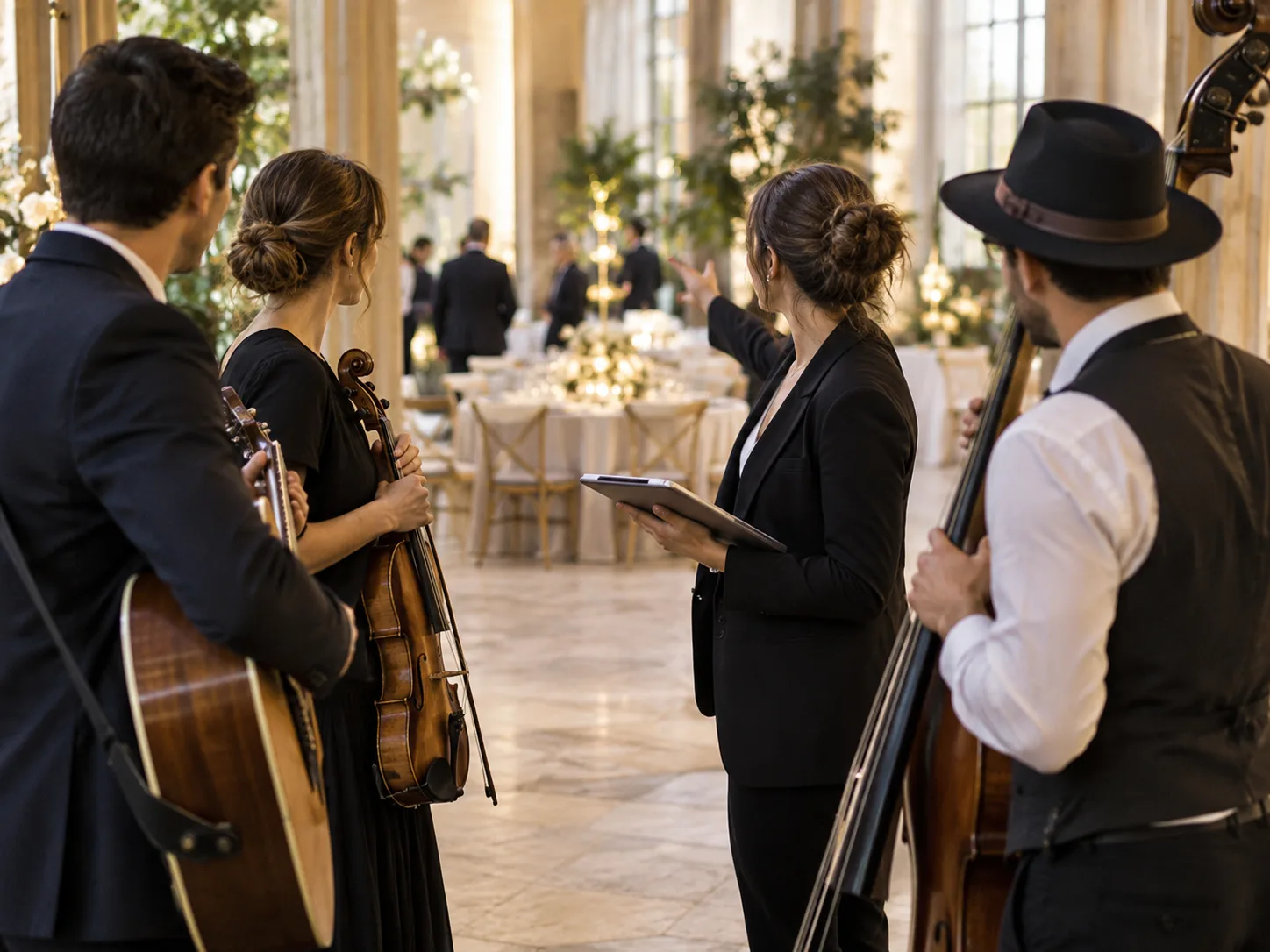
Roaming band technical requirements include power access, venue space, movement routes and coordination details that venues should review before an event. Requirements can vary depending on the instruments, performance format and setup, so planners should confirm details directly with the performers. This guide explains the main technical considerations venues need to understand before hosting a roaming band.
Why Technical Planning Matters for Roaming Bands
A successful roaming performance depends on more than the musicians and their repertoire. The venue environment plays an important role in how naturally performers can move, interact with guests and create memorable moments.
Unlike a traditional stage-based performance, where musicians usually remain in one fixed location, a roaming band uses the event space as part of the experience. This means venues should consider how performers access different areas, how guests move throughout the space and which locations are suitable for interaction.
Proper planning helps answer important questions before the event:
- Where can the musicians move comfortably?
- Are there areas where performance is restricted?
- How will performers access the venue?
- Are there sound or timing limitations?
- Does the space support the type of experience the organizers want to create?
The objective is not to create unnecessary technical complexity. Instead, effective preparation helps venues and planners identify the practical details that allow performers to work comfortably while maintaining a smooth guest experience.
For example, a wedding reception in an outdoor venue may require different considerations compared with a corporate event held inside a hotel. The number of guests, venue layout and expected level of interaction can influence how the performance should be coordinated.
Key Roaming Band Technical Requirements Venues Should Review
Every roaming band has different needs depending on its instruments, number of performers and performance format. However, there are several common venue requirements for a roaming band that planners should review before the event.
These considerations typically include:
- Power availability.
- Sound limitations.
- Performance areas.
- Loading access.
- Movement routes.
- Weather planning.
- Venue policies.
Understanding these factors before the event creates better communication between the venue team and the performers.
A clear planning process also allows organizers to identify potential limitations early instead of discovering them during setup or on the event day.
Power and Sound Considerations for a Roaming Band
One of the first aspects to confirm when preparing for a roaming performance is whether the musicians require power access or additional sound support.
Some roaming bands may perform using mostly acoustic instruments, while others may require amplification depending on the event size, venue conditions and performance format.
Technical needs may depend on:
- Number of musicians.
- Type of instruments.
- Indoor or outdoor location.
- Expected guest count.
- Performance duration.
- Venue sound policies.
Because there is no single setup that applies to every roaming band, venues should confirm requirements directly with the performers before making assumptions.
Important details to review include:
- Available power sources.
- Location of electrical access.
- Possible equipment placement areas.
- Restrictions related to cables or technical equipment.
- Sound limitations within the venue.
For example, a small acoustic roaming group performing during a cocktail reception may have minimal technical requirements, while a larger group performing during a corporate celebration may require additional coordination.
Sound Restrictions and Venue Policies
Many venues have specific rules regarding live music, sound levels and performance schedules. These policies should be discussed before the event to ensure the band understands the environment where they will perform.
Important considerations include:
- Maximum permitted volume levels.
- Performance time restrictions.
- Areas where music is allowed.
- Nearby rooms or spaces affected by sound.
- Internal venue guidelines.
This information helps performers adapt their approach and avoid situations where technical limitations affect the guest experience.
For example, a hotel hosting several events on the same day may have specific sound requirements that influence where and when the roaming band can perform.
Sharing these details early creates a smoother coordination process between the venue, planner and musicians.
Venue Access and Load-In Requirements
Access logistics are an important part of roaming band setup requirements. Even when a roaming band does not use a traditional stage, musicians may still need time and space to arrive, organize instruments and prepare before the performance.
Venues should consider:
- Arrival schedules.
- Loading and unloading areas.
- Parking availability.
- Security procedures.
- Distance between entrances and event spaces.
- Staff assistance when required.
A clear access plan helps reduce delays and allows performers to focus on creating the intended experience for guests.
For example, a large venue with multiple entrances may need to provide specific instructions about where musicians should arrive, where equipment can be stored temporarily and which routes are easiest to use.
Performance Space and Movement Routes
One of the most important differences between a roaming band and a traditional live band is how performers use the venue space.
A traditional band usually performs from a fixed location, while a roaming band moves through the event area and creates interactions with guests throughout different moments of the celebration.
Understanding the differences between roaming bands and traditional bands helps venues prepare spaces that support mobility, guest circulation and a more flexible performance experience.
When reviewing the venue layout, planners should consider:
- Guest walking paths.
- Areas where guests naturally gather.
- Open spaces for musicians to move.
- Potential obstacles or narrow sections.
- Locations for important event moments.
- Areas where movement may not be permitted.
The goal is not to create a dedicated stage area, but rather to identify how the performers can move comfortably while maintaining guest safety and event flow.
For example, a large outdoor celebration may allow musicians to move between multiple guest areas, while a smaller indoor venue may require a more planned route to avoid interruptions.
A venue layout that considers movement from the beginning allows the roaming band to interact naturally with guests without affecting other activities taking place during the event.
Weather Planning for Outdoor Roaming Performances
Outdoor events require additional preparation because weather conditions can affect instruments, equipment and the overall guest experience.
When planning an outdoor roaming performance, venues and planners should consider:
- Backup indoor locations.
- Covered areas.
- Protection from rain or strong weather conditions.
- Alternative movement routes.
- Changes to the event schedule if necessary.
Weather planning is especially important for roaming performances because musicians may move between different areas instead of remaining in one protected location.
For example, an outdoor wedding may include a backup cocktail area where performers can continue engaging with guests if weather conditions change.
A good weather plan does not need to complicate the event. It simply provides an alternative option that allows the venue, planners and performers to respond more effectively if conditions change.
Venue Restrictions to Confirm Before the Event
Every venue has its own policies, and these requirements should be discussed before the performance date.
Some important details to confirm include:
- Sound limitations.
- Performance schedules.
- Access restrictions.
- Areas where performers cannot enter.
- Safety requirements.
- Venue-specific procedures.
Sharing this information early helps the band understand what is possible within the space and prevents misunderstandings during the event.
For example, some venues may restrict certain areas because of guest safety, ongoing activities or operational requirements. Knowing these limitations beforehand allows performers to adapt their movement and performance approach.
Clear communication between the venue and the musicians is one of the most important parts of successful live music logistics for events.
Creating Better Communication Between Venues and Bands
Technical preparation works best when venues and performers communicate before the event.
A successful coordination process usually includes sharing:
- Venue layout information.
- Access instructions.
- Event timeline.
- Sound policies.
- Performance expectations.
- Special considerations.
The purpose of this preparation is not to create a rigid technical document. Instead, it helps everyone involved understand the environment and make informed decisions.
Once venue details are clear, reviewing essential tips for hiring a roaming band can help planners understand what information should be confirmed before moving forward with performers.
After understanding the technical and operational requirements, organizers can focus on selecting performers that match their event style and audience. Knowing how to choose a roaming band that matches your event needs helps connect venue considerations with the overall guest experience.
Preparing Your Venue Creates a Smoother Roaming Band Experience
Technical preparation plays an important role in creating a successful roaming band experience. Reviewing power access, movement areas, venue restrictions, weather considerations and coordination details helps create better communication between venues, planners and performers.
Because every roaming band setup can vary, the best approach is to confirm requirements directly with the musicians before the event. A clear conversation allows everyone to understand expectations and create a live music experience that fits the space, audience and atmosphere.
Roaming Band helps you explore different performers, compare styles and connect directly with bands that match your event needs.
Create Memorable Events with Live Music That Moves
Discover roaming bands that perform among your guests, create interaction, and elevate weddings, private parties, and corporate events. Explore your options and contact the right band today.
Frequently Asked Questions
? Do roaming bands need power for every performance?
Not every roaming band requires the same power setup. Technical requirements depend on the instruments, number of performers, performance format and whether the band uses acoustic, amplified or hybrid equipment.
- Example: A small acoustic roaming group performing during a cocktail reception may have different needs compared with a larger group using additional sound equipment for a corporate celebration.
- Recommendation: Confirm power requirements directly with the performers before the event and provide information about the venue’s available resources.
? How much space does a venue need for a roaming band?
The space required for a roaming band depends on the number of musicians, instruments, guest flow and the way performers will move through the venue. Unlike traditional bands, roaming performances require consideration of movement routes and interaction areas.
- Example: A large outdoor venue may allow performers to move between several guest areas, while a smaller indoor space may require more structured movement planning.
- Recommendation: Share venue layouts, guest circulation areas and restricted zones with the band before the event.
? What venue information should be shared with a roaming band?
Venues should share important operational details, including access points, performance areas, schedules, sound restrictions and any rules that may affect the musicians during the event.
- Example: A venue may need to explain loading access, parking limitations or areas where performers cannot enter.
- Recommendation: Prepare a simple venue information summary so planners and performers have the same expectations before the event.
? Can a roaming band perform outdoors?
Yes, many roaming bands can perform outdoors, but preparation depends on weather conditions, venue layout, instruments and the specific setup chosen by the performers.
- Example: An outdoor wedding may require a covered area or alternative location in case rain, wind or weather conditions affect the performance.
- Recommendation: Discuss weather backup options with the band and venue team before the event date.
? Are roaming band technical requirements different from traditional bands?
Yes. Roaming band technical requirements are often different because performers move through the venue and interact directly with guests instead of performing from a fixed stage.
- Example: A traditional band may mainly require stage space, while a roaming band may need clear walking routes, guest access and flexible performance areas.
- Recommendation: Consider the performance format when planning your venue layout and confirm details directly with the musicians.