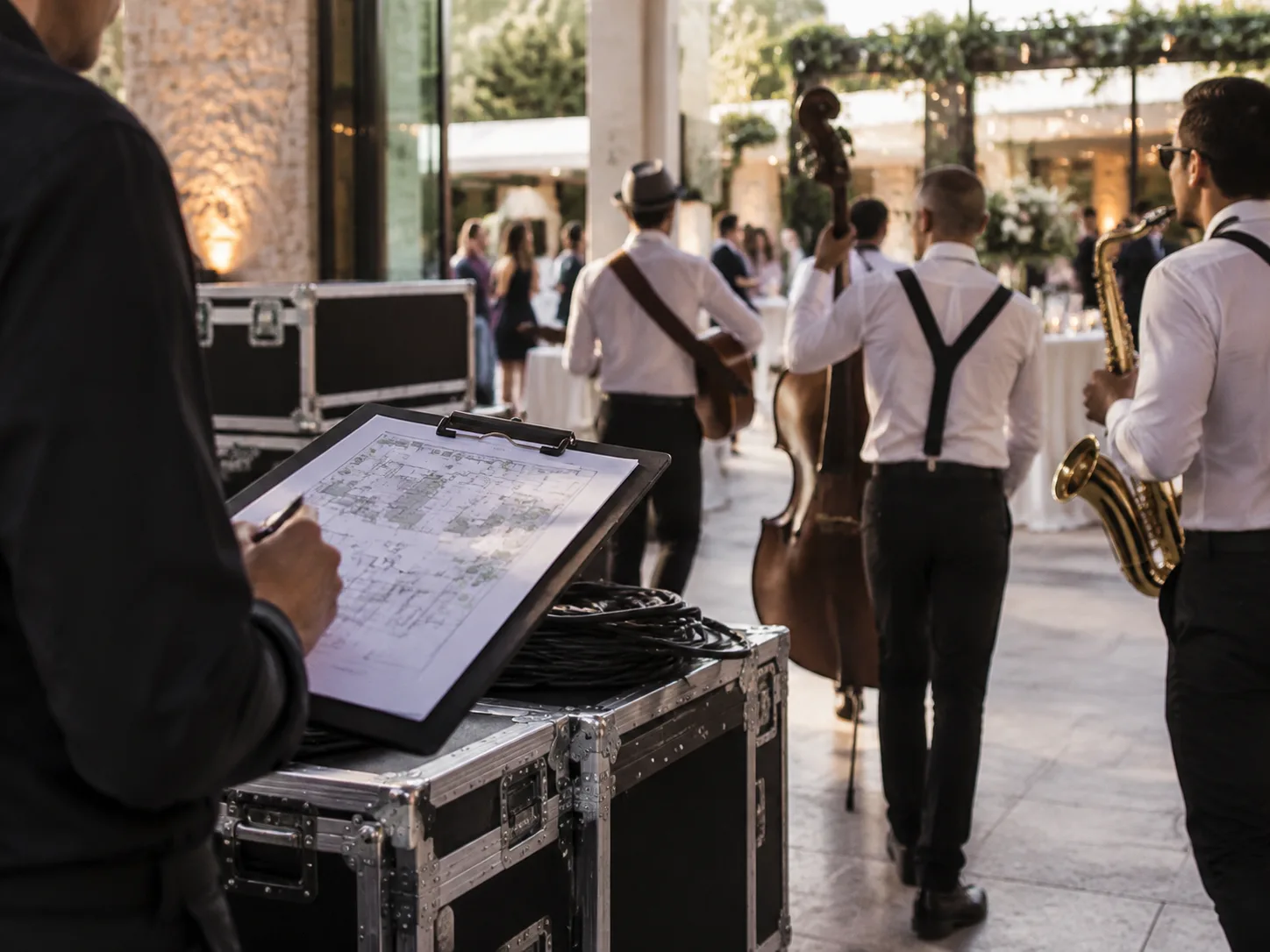
Knowing how to brief a roaming band helps performers understand your event, your guests and the experience you want to create. A good roaming band brief should include details about the event type, audience profile, venue layout, schedule, musical preferences and special requests. Providing the right context allows musicians to prepare a performance that feels natural, personal and connected to the atmosphere of your celebration.
Unlike traditional stage-based entertainment, roaming bands interact directly with guests while moving through the event space. Because of this, performers need more than a playlist or a performance time — they need to understand the feeling, flow and expectations behind the event.
A clear event brief for a live band creates a better conversation between clients and musicians, helping both sides align before the performance begins.
Why a Clear Brief Matters When Hiring a Roaming Band
A successful roaming performance depends on understanding the environment where the music will happen. The same band can create very different experiences depending on whether they are performing at a wedding reception, corporate event, private party or destination celebration.
A detailed briefing helps the band understand:
- The purpose of the event.
- The type of guests attending.
- The expected atmosphere.
- The moments where music should have more impact.
- The level of interaction that feels appropriate.
The goal is not to control every moment of the performance. Instead, a good brief gives the band the information they need to adapt naturally and create a better experience for guests.
For example, a formal corporate reception may require elegant interaction and controlled energy, while a private celebration may encourage more spontaneous engagement.
Before preparing your own brief, it can also help to understand what a roaming band is and how this format works, especially if you are comparing different types of live entertainment. Understanding the format first makes it easier to communicate the type of experience you want to create for your guests.
What Information Should You Include in a Roaming Band Brief?
A strong roaming band brief should provide enough context for musicians to understand your expectations while leaving room for their professional experience and creativity.
The most useful information usually falls into five areas: the event, the guests, the venue, the music and the important moments.
1. Explain the Event Type and Overall Atmosphere
The first step in a good briefing is explaining what type of event you are planning.
A roaming band may approach different events in different ways depending on the purpose and atmosphere.
Include information such as:
- Type of event: wedding, corporate gathering, private party, festival or celebration.
- Event style: elegant, relaxed, energetic, formal or casual.
- Main objective of the entertainment.
- The feeling you want guests to remember.
For example:
A wedding cocktail reception may require a warm and welcoming atmosphere where guests can socialize, while a corporate celebration may focus on creating energy and encouraging networking.
The more clearly you communicate the atmosphere, the easier it is for the band to understand the role music should play.
2. Share Your Guest Profile and Audience Expectations
One of the most valuable parts of a roaming band brief is explaining who your guests are.
Guest expectations can influence:
- Musical choices.
- Interaction style.
- Energy level.
- Performance approach.
Useful information includes:
- Approximate guest age range.
- Whether guests are local or international.
- Cultural considerations.
- Whether guests are likely to participate actively.
- The type of interaction you consider appropriate.
For example, an event with international guests may benefit from a broader musical approach, while a private celebration with close friends may allow for more personal interactions.
A roaming band does not only perform music — they create moments around the people attending the event. Understanding the audience helps them make better decisions.
3. Provide Venue Layout and Movement Information
Because roaming bands perform among guests, venue details are an important part of the briefing process.
A useful roaming band brief should include:
- Main performance areas.
- Guest circulation routes.
- Indoor and outdoor spaces.
- Areas where guests will gather.
- Important locations for special moments.
- Venue restrictions.
Unlike a traditional stage performance, roaming entertainment depends heavily on movement and space.
For example:
A large outdoor venue may allow performers to move between different guest areas, while a smaller indoor location may require a more compact approach.
Sharing venue information early helps the band understand how they can interact naturally with guests.
4. Explain Musical Preferences and Style Direction
A good briefing should communicate more than a list of songs.
The most useful information explains the musical direction and atmosphere you want to create.
Include:
- Preferred genres.
- Favorite artists or references.
- Songs that represent your style.
- Musical styles that should be avoided.
For example:
Instead of only saying:
“Play upbeat music.”
You could explain:
“We want an elegant but energetic atmosphere where guests can enjoy conversation while the music gradually becomes more celebratory.”
This type of context gives performers a clearer understanding of your expectations.
5. Include Do-Not-Play Requests
A complete briefing should also mention what does not fit your event.
A do-not-play list can include:
- Songs you do not want performed.
- Genres that do not match your audience.
- Styles that do not fit the event atmosphere.
This information helps avoid misunderstandings and allows the band to focus on choices that better match your vision.
A short list of exclusions can be just as valuable as a list of preferred songs.
6. Highlight Important Moments During the Event
Some parts of an event require more attention from the performers.
When creating your roaming band brief, mention moments such as:
- Guest arrival.
- Wedding entrances.
- Cocktail hour.
- Announcements.
- Special celebrations.
- Closing moments.
These details help the band understand when to increase energy, create interaction or provide a more subtle musical background.
For example:
A couple may want a romantic atmosphere during arrival but a more energetic experience during the celebration afterward.
How to Create a Better Event Brief for a Live Band
A useful event brief does not need to be complicated. The most effective briefs are clear, organized and focused on the information that will influence the performance.
A simple structure can include:
Event overview
- Date and location.
- Event type.
- Number of guests.
- General atmosphere.
Guest information
- Audience profile.
- Expected interaction level.
- Important cultural considerations.
Music direction
- Preferred genres.
- Favorite references.
- Songs or styles to avoid.
Schedule
- Key moments.
- Performance expectations.
- Important transitions.
Venue information
- Layout.
- Guest areas.
- Restrictions.
This approach makes communication easier for both the client and the performers. Once you understand the type of experience you want to create, having a clear vision can also help you choose the right roaming band for your event. Musical style, guest expectations and event atmosphere all play an important role when comparing different performers.
How Better Briefing Creates Better Communication With the Band
A strong briefing does not replace the direct conversation between the client and the band. It improves it.
When performers understand the event context, they can ask better questions, provide more relevant recommendations and better understand whether their style matches the occasion.
Clear communication also helps you customize your roaming band experience according to your guests, venue and event goals. A detailed conversation allows performers to better understand the atmosphere, interaction level and musical direction you want to achieve.
A detailed brief creates a stronger foundation for collaboration and helps everyone work toward the same objective: creating memorable live music moments. Once your expectations are clear, reviewing essential tips for hiring a roaming band can help you prepare the next steps with greater confidence.
Create Memorable Events with Live Music That Moves
Discover roaming bands that perform among your guests, create interaction, and elevate weddings, private parties, and corporate events. Explore your options and contact the right band today.
A Clear Brief Creates a More Personal Roaming Band Experience
A successful roaming band experience starts with understanding. Sharing your event details, guest expectations, venue information and musical preferences gives performers the context they need to create a more connected performance.
A good briefing is not about controlling every detail — it is about creating a clear conversation between you and the musicians. When both sides understand the vision, it becomes easier to create live music moments that feel authentic, engaging and appropriate for the event.
Explore Roaming Band to discover different performers, compare styles and connect directly with bands that match the experience you want to create.
FAQs About Briefing a Roaming Band
? How do I brief a roaming band before my event?
To brief a roaming band effectively, share important details about your event, including the type of celebration, guest profile, venue information, schedule, musical preferences and any special requests. This context helps performers understand your expectations and create a more personalized live music experience.
- Example: A wedding couple may explain that they want elegant music during guest arrival and more interactive moments during the celebration later in the evening.
- Recommendation: Prepare your main event details before contacting bands so the first conversation starts with clear expectations.
? What should an event brief for a live band include?
An event brief for a live band should include the information that can influence the performance, such as the event type, audience expectations, venue layout, preferred music styles, important moments and songs or genres to avoid.
- Example: A corporate event brief may include presentation times, networking periods and the desired level of interaction with attendees.
- Recommendation: Focus on practical details that help the band understand the atmosphere instead of adding unnecessary information.
? Why does a roaming band need to know my guest profile?
A roaming band needs information about your guests because audience expectations can influence musical choices, interaction style and the overall energy of the performance. Understanding who will attend helps musicians create moments that feel natural and appropriate.
- Example: A luxury dinner with international guests may require a different approach compared with a relaxed private celebration.
- Recommendation: Share relevant information about your audience, including guest type, age range and expected interaction level.
? Should I provide a playlist when briefing a roaming band?
A playlist can be helpful, but it should be combined with information about the atmosphere and style you want to create. A roaming band usually needs context about the feeling of the event, not only a list of songs.
- Example: Instead of only sharing tracks, explain whether you want an elegant cocktail atmosphere, an energetic celebration or a relaxed guest experience.
- Recommendation: Use playlists as references and include broader guidance about your preferred musical direction.
? Can a roaming band adapt their performance to different moments of an event?
Yes. One of the main advantages of a roaming band is the ability to adapt to guest energy, event flow and different moments throughout the celebration. A clear brief helps performers understand when different approaches may be needed.
- Example: A band may create a welcoming atmosphere during guest arrival and increase interaction during a later celebration moment.
- Recommendation: Include important timeline points in your briefing so performers understand when music should be subtle, energetic or more interactive.