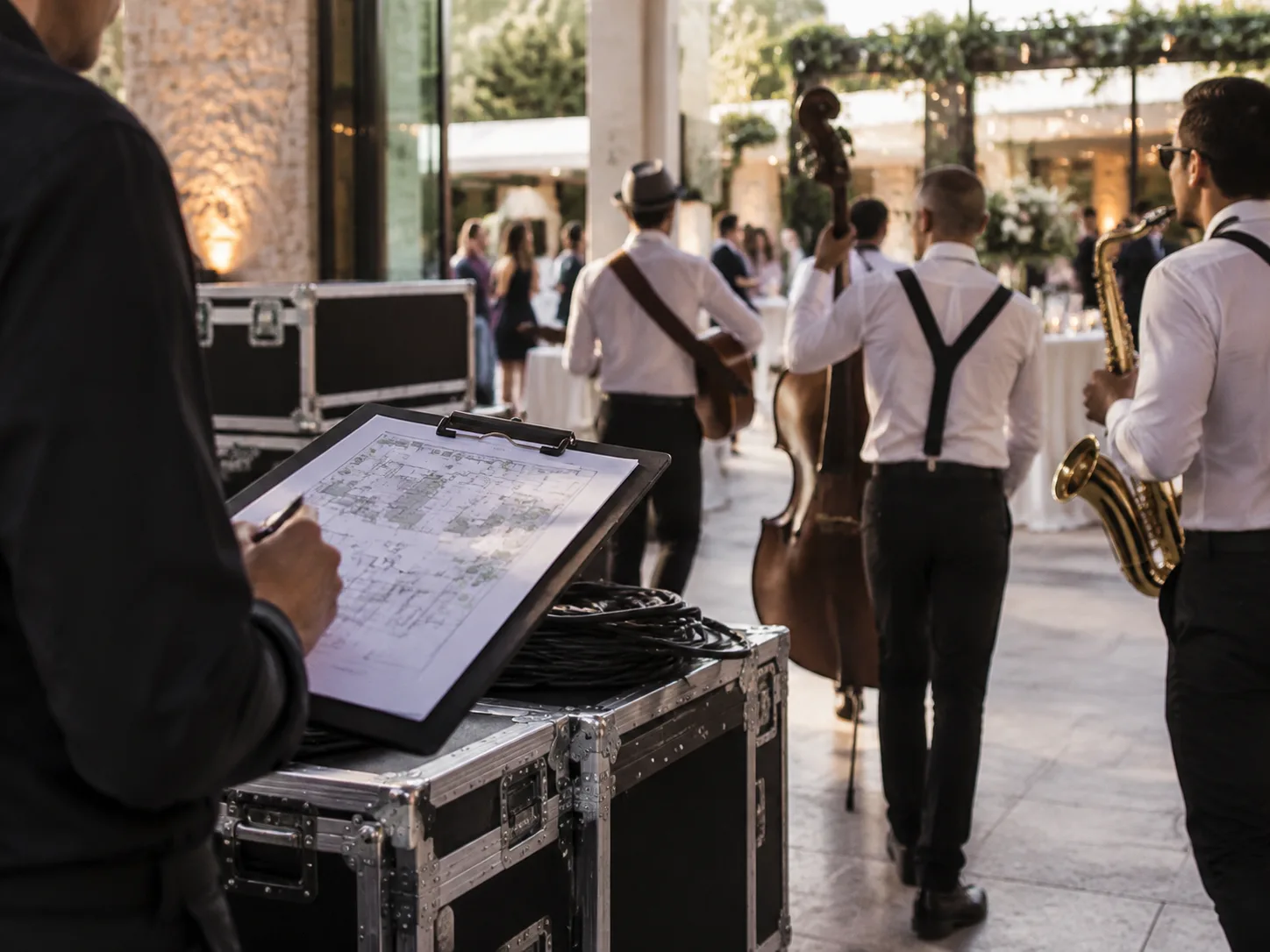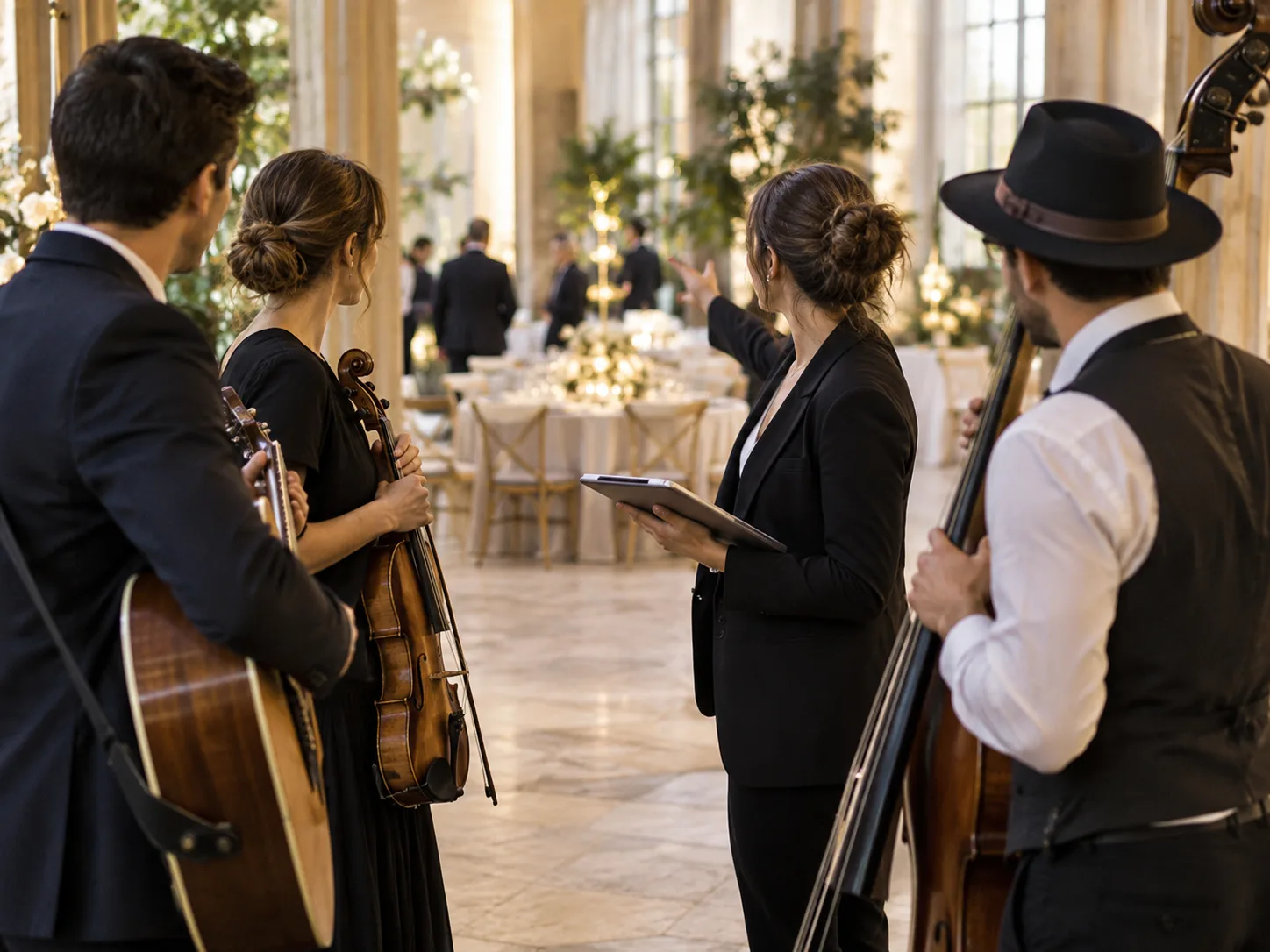
In simple terms: a roaming band is a live music group that performs while moving among your guests instead of staying on a fixed stage. The result is a more interactive, flexible, and memorable experience that feels close, alive, and naturally woven into the event.
Unlike a traditional stage act, a roaming band brings the music directly into the crowd. Musicians can move through cocktail areas, terraces, gardens, receptions, and dining spaces, creating real moments of connection without interrupting the flow of the celebration.
| At a glance | Roaming band | Traditional stage band |
|---|---|---|
| Performance style | Moves among guests | Performs from one fixed location |
| Guest interaction | High and direct | More distant and audience-facing |
| Best for | Cocktail hour, receptions, outdoor events, luxury gatherings, moving event formats | Dance floor sets, formal concerts, large-scale fixed programming |
| Setup | Often lighter, more flexible, and adapted to movement | Usually more dependent on a stage and static production |
What Is a Roaming Band?
A roaming band is a mobile live band designed to perform within the event rather than apart from it. Instead of asking guests to turn toward a stage, the band moves through the space and plays up close, creating a more personal and immersive atmosphere.
This format is especially appealing for events where experience matters as much as music. Because the musicians are physically present among guests, the performance feels spontaneous, elegant, and highly engaging. It is not just live music in the background. It becomes part of the social energy of the event.
Roaming bands are often associated with weddings, private celebrations, destination events, and stylish corporate gatherings, but they can work beautifully across many formats. If you are comparing similar concepts, this guide on roaming band vs strolling band helps clarify the differences.
How Does a Roaming Band Work?
A roaming band performs while walking or repositioning throughout the venue, adapting its presence to the rhythm of the event. Depending on the format, the musicians may perform acoustically or use lightweight, battery-powered amplification that allows them to stay mobile.
- They move with the event: from welcome drinks to cocktail hour, from garden aperitifs to post-ceremony moments.
- They interact naturally with guests: creating eye contact, surprise moments, and a stronger emotional connection.
- They adapt to the space: ideal for venues where a fixed stage feels too rigid or too distant.
- They support flow: the music can follow the celebration instead of forcing guests into one single area.
That flexibility is one of the biggest reasons people choose this format. A roaming band can elevate an event without making it feel overproduced, which is especially valuable when the goal is a refined but warm guest experience.
What Makes a Roaming Band Different from a Traditional Band?
The biggest difference is not only mobility. It is the type of atmosphere the performance creates. A traditional band usually delivers music from a fixed focal point. A roaming band, by contrast, creates a more fluid and interactive experience, with the music moving through the celebration itself.
This makes roaming bands particularly effective when you want live music to feel close, flexible, and naturally integrated into the event. They are often a better fit for cocktail-style formats, garden weddings, destination celebrations, luxury receptions, and events where guest circulation is part of the experience.
If you are weighing formats, you may also want to explore roaming bands vs traditional bands to understand which style fits your event best.
Create Memorable Events with Live Music That Moves
Discover roaming bands that perform among your guests, create interaction, and elevate weddings, private parties, and corporate events. Explore your options and contact the right band today.
Where Are Roaming Bands Usually Hired?
One of the reasons roaming bands are so appealing is that they work across different event styles without losing their sense of intimacy. Their format is naturally flexible, which makes them a strong choice for hosts who want live music to feel elegant, social, and memorable.
Weddings
Roaming bands are especially popular for weddings because they bring emotion and movement without making the performance feel separate from the celebration. They work beautifully for welcome moments, drinks receptions, outdoor ceremonies, and transitions between spaces. If weddings are your main focus, you can also explore wedding roaming bands and learn when to book a roaming wedding band.
Private Parties
For birthdays, anniversaries, and private celebrations, roaming bands add charm and immediacy. The performance feels closer to guests, which helps create a more relaxed and lively atmosphere than a distant stage setup often can.
Corporate Events
At brand activations, dinners, receptions, and corporate celebrations, roaming bands help break the ice and energize the room without overwhelming conversation. They can support networking, soften transitions, and create a more elevated guest experience.
Destination and Outdoor Events
Roaming bands are also a natural fit for destination celebrations and outdoor venues where flexibility matters. Gardens, terraces, vineyards, courtyards, and multi-space properties often benefit from a format that can move with the event rather than remain fixed in one place. For more ideas, see the best events for roaming bands.
Why Guests Love Roaming Bands
People remember roaming bands because the performance feels personal. Instead of observing from a distance, guests experience the music at close range. That proximity creates more emotion, more surprise, and more interaction.
- They create connection: guests feel included rather than simply entertained from afar.
- They keep the energy flowing: the music can move with the crowd and support the rhythm of the event.
- They feel memorable: close-up live music often becomes one of the moments people talk about after the event.
- They adapt beautifully: this format works across elegant, relaxed, luxury, and creative event styles.
For planners and hosts, that matters. The goal is rarely just to fill the room with sound. It is to create an atmosphere guests can feel and remember.
Is a Roaming Band Right for Your Event?
A roaming band is usually the right fit when you want live music that feels social, flexible, and deeply connected to the guest experience. It can be an excellent option if:
- you want music to happen among your guests rather than away from them;
- your event includes movement between spaces or moments;
- you want to create a more immersive atmosphere without relying on a full stage setup;
- you value spontaneity, guest interaction, and memorable live performance moments.
If you are already considering options, these guides can help you move to the next step: how to choose the perfect roaming band, and essential tips for hiring a roaming band.
Looking for a roaming band for your event? Explore your options, compare styles, and connect directly with the right musicians for your celebration. At Roaming Band, the focus is simple: live music that moves, interacts, and creates unforgettable moments for your guests.