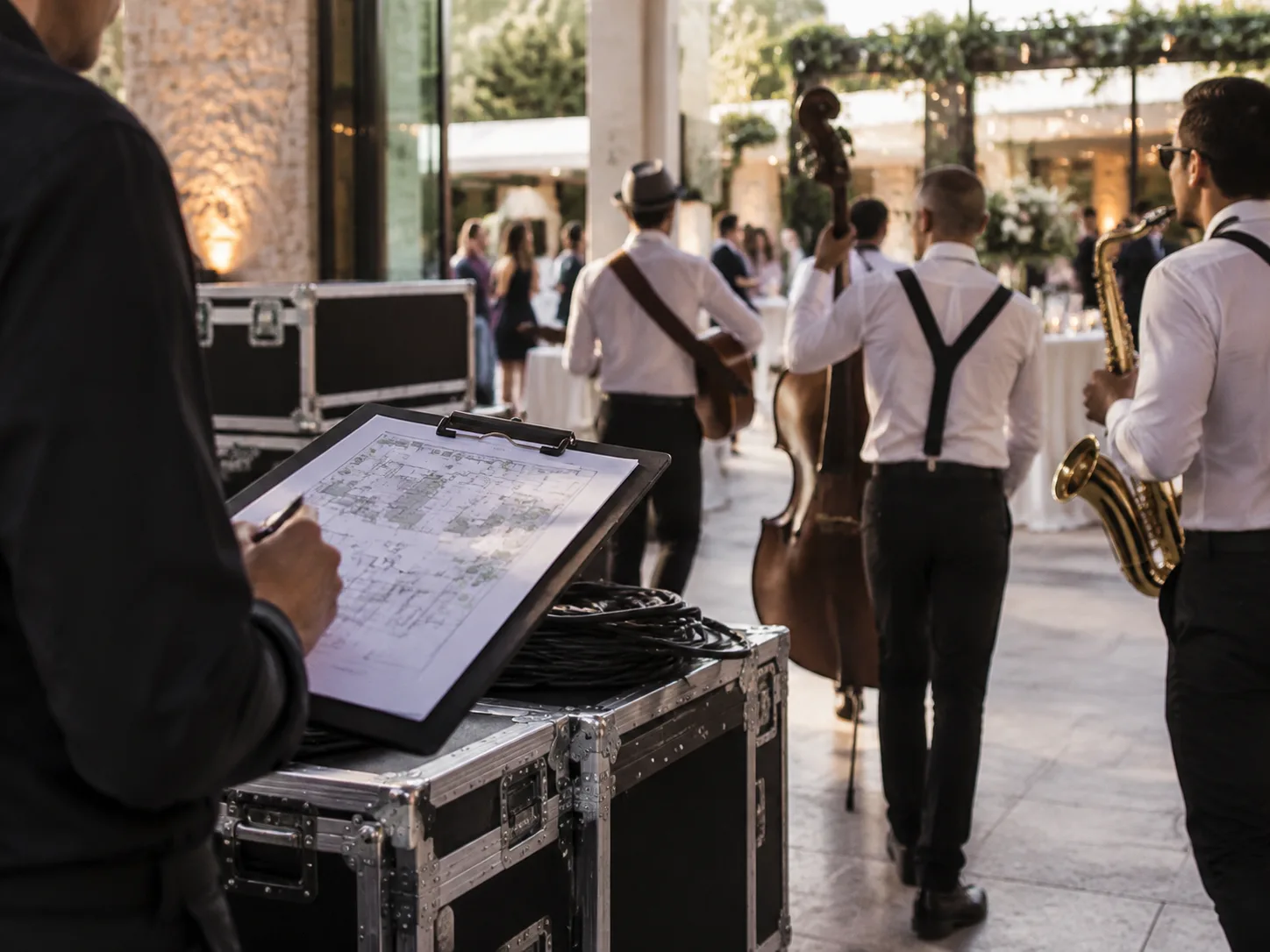
Most roaming band travel fees range from a simple mileage surcharge for local gigs to 10–20% of the total contract for long-distance events . These costs typically cover professional transport, secure accommodation, musician per diems, and specialized instrument freight. This guide breaks down common billing models, hidden expenses like parking or permits, and practical negotiation tactics to help you cap your entertainment budget.
How roaming band travel fees are typically structured
Most roaming bands separate the base performance fee from travel and logistical charges. The performance fee compensates the musicians for rehearsal, performance time and creative labor; roaming band travel fees are an additional line item to cover costs the band incurs to get personnel and instruments to and from your venue. Bands use different models: per-mile mileage, flat regional rates, tiered radii (e.g., local, nearby, long-distance), hourly travel rates, or all-inclusive packages that bundle travel with setup time.
Each model has advantages and downsides depending on distance, crew size, and equipment needs. If you are looking for more essential tips for hiring a roaming band, it is vital to understand that the logistics of a mobile, acoustic act differ significantly from a traditional stage band. Clear communication during the initial inquiry helps prevent mid-contract adjustments and ensures that the logistical side of the entertainment is as seamless as the music itself.
Common billing models and what they include
Per-mile or per-kilometer charges are straightforward when the event site is reachable by road and instruments can stay in a vehicle. A flat regional fee simplifies quoting and avoids surprises for both parties, but may overcharge for short trips. Hourly travel rates are useful when travel time is long or unpredictable.
All-inclusive packages can be convenient but require clarity about what expenses are bundled — for example, whether overnight accommodation is included. Ask bands to itemize roaming band travel fees so you understand components such as driver time, vehicle rental, fuel surcharges, and instrument freight. Understanding these models is essential for accurate event planning, especially when booking talent for destination weddings or remote luxury retreats.
Identifying the hidden costs of hiring a roaming band
Beyond the visible travel fee there are predictable and unpredictable hidden costs. Predictable items include parking fees, tolls, loading zone permits and short-term vehicle hire. Less obvious costs include backline transport (drums, amplifiers), protective cases and shipping insurance for fragile instruments, overtime when travel overruns, and local labor if stagehands or security are required.
Clauses related to cancellation, delays, or access restrictions can trigger additional charges. Use a checklist during conversations so you capture these potential additions rather than discovering them after a final invoice. To maintain a professional atmosphere, it is helpful to understand roaming band etiquette and what to expect regarding arrival times, meal breaks, and shared spaces.
Examples of hidden line items and real impacts
For a small roaming band hired for a wedding 120 miles away, hidden costs might include a one-night hotel for the drummer because a late return combined with early next-day travel would exceed legal driving limits for a hired driver; a cargo van rental to move a large drum kit; and an unexpected bridge toll. Individually these may seem modest, but combined they can add 10–20% to a simple travel quote.
Ask bands to provide a sample invoice or a line-item estimate so you can see the potential add-ons for similar past events. To find the right fit for your event’s scale and vibe, you can choose the perfect roaming band by comparing their technical riders and specific travel requirements. Addressing these small line items early prevents them from accumulating into a significant budget surprise on the week of the event.
Accommodation and lodging: standards, expectations and negotiation
When a band needs to stay overnight, accommodation expectations vary by group size, equipment, and budget. Some bands accept shared rooms in mid-range hotels; others require single rooms for safety, rest, or equipment security. Clarify four points: the number of rooms required, check-in/check-out times that match arrival and rehearsal schedules, whether rooms must be adjacent or on a single floor for security, and who pays incidentals or holds on credit cards. If the band is traveling internationally, hotels near the venue with secure instrument storage are often preferable and sometimes necessary.
How to specify accommodation in your event brief
Include accommodation needs in the initial brief: number of rooms, preferred star rating or budget range, desired proximity to the venue, and any accessibility or dietary notes for adjacent services. For larger multi-act events, bands may request dedicated secure storage for instrument cases. Offering a hotel with a flexible cancellation policy can reduce the band’s risk and may reduce the accommodation portion of roaming band travel fees.
Transport, parking and freight for instruments
Transport logistics are central to roaming band travel fees. The band must move people and instruments, and those items have different handling needs. Common vehicle options are passenger cars, passenger vans, cargo vans, or small trucks. Freight for oversized or fragile instruments may require padded cases, specialized tie-downs, or professional courier services. Also consider local parking and loading arrangements: does your venue offer a dedicated loading bay? Will the band need temporary permits? If a venue has restricted access, bands may require additional crew or equipment to carry instruments long distances between parking and performance spaces.
Practical transport checklist
- Confirm a reserved loading/unloading area and arrival window with the venue.
- Ask the band whether their quote assumes on-site parking within X meters of the load-in point.
- Identify local restrictions such as low clearances, narrow streets, or pedestrian zones that could force additional manual carrying or alternate routing.
When these elements are unresolved, bands often add contingencies to roaming band travel fees to account for extra labor, vehicle hires, or third-party courier charges.
Meals, per diem and break time for roaming musicians
Meal provisioning and per diem are common yet sometimes overlooked costs. Bands traveling more than a few hours from base often charge either a per-person per-meal fee or request that the host provide meals during extended engagements and rehearsals. Agreements typically cover full meals for travel days and performance days; snacks and beverages during performance windows are also customary. If a band must be ready for performance immediately on arrival, they may require a hot meal on-site rather than vouchers.
How to handle meals in your budget
Decide whether the event will provide meals or reimburse reasonable receipts. If the band travels internationally, you might agree on a fixed per-di em to simplify administration; make sure the amount respects local meal costs. For private events, offering meals reduces uncertainty and can be less administratively burdensome than collecting receipts and reimbursing later.
Insurance, liability and permits related to travel
Bands that travel for events often carry liability insurance, but your venue or client contract may require specific endorsements or coverage limits. Additionally, transporting instruments across borders can trigger customs paperwork, carnets, or temporary import permits. For public spaces, local authorities sometimes require street performance permits or amplified sound permits. These administrative items are part of the hidden costs of hiring a roaming band because they can require both time and money to secure, and bands may bill the client for permit fees, agency facilitation charges, or insurance supplements necessary to meet venue requirements.
Who should buy permits and insurance?
Clarify at booking whether the band or the client will secure permits and insurance. A common arrangement: the client arranges venue permits and facility insurance while the band provides proof of general liability insurance. If the event is outdoors or in a public right-of-way, the client may be contractually asked to secure street performance permits or indemnify the band for risks associated with the location; in such cases roaming band travel fees can include administrative time to prepare permit applications.
International travel—visas, customs and freight
International travel amplifies complexity. Roaming bands crossing borders must consider work visas, ATA carnets for instruments, customs duties if instruments are sold, and international freight logistics for oversized gear. Visas for short performances can still be required; a tourist visa will not always be sufficient for a paid performance. ATA carnets simplify temporary export/import of professional equipment but cost fees and require a deposit or guarantee in many jurisdictions. Freight forwarders can handle oversized instruments like concert bass drums or brass sections, but their quotes often include handling, customs clearance, and temporary storage charges that add to roaming band travel fees.
Example: hiring a band from another country
If you hire a European strolling band to perform at a US-based wedding, expect costs for work authorizations, carnet issuance fees, international freight for heavy percussion, and potentially hotel nights due to flight schedules. The band may include a line for customs brokerage and anticipate arrival windows that avoid customs delays. Negotiate who bears the risk of denied entry: often promoters ask the band to confirm visa eligibility before signing, but it is practical to include a contingency clause that addresses denied visa costs and potential refunds.
How bands calculate per-person and per-equipment fees
Bands commonly price travel on a per-person basis because it scales with the number of musicians requiring seats, accommodations and meals. Equipment fees capture the marginal cost of moving large items. When multiple crew members are needed for load-in or technical support, those staff costs are usually billed separately from the musicians’ fees. Always ask for an explicit breakdown: base travel fee per person, equipment freight, vehicle hire, driver or crew costs, and any expected per diems. A transparent breakdown converts roaming band travel fees from a black box into a predictable budget line.
Negotiation points that actually work
Offering to arrange and pay for certain items directly (for example, booking group accommodation or reserving a loading bay) often reduces the cash component of roaming band travel fees because it removes vendor margins and administrative risk. Alternatively, ask whether bands will accept a capped travel reimbursement where they submit receipts up to an agreed limit; this approach balances the band’s protection against runaway costs and your desire to cap the spend.
| Cost category | What it covers | How to manage it |
|---|---|---|
| Transport & vehicle | Mileage, van/truck rental, driver time, tolls | Confirm loading bay and distance; offer parking permit |
| Accommodation | Hotel rooms, security for gear, early check-in | Book hotels directly or cap nightly rate |
| Equipment & freight | Packing, cases, shipping, customs carnets | Request itemized freight quote and insurance |

Create Memorable Events with Live Music That Moves
Discover roaming bands that perform among your guests, create interaction, and elevate weddings, private parties, and corporate events. Explore your options and contact the right band today.
Common disputes and how to avoid them
Frequent disputes arise from ambiguous scope (who arranges hotels/permits), unapproved last-minute expenses, and unclear cancellation terms. Avoid these by specifying who handles what in writing, establishing approval thresholds for unplanned expenses (e.g., anything above $100 requires prior consent), and by requesting itemized documentation. For international gigs, require the band to confirm visa eligibility before deposits are paid to avoid the unpleasant expense of non-refundable travel bookings due to denied entry.
Final recommendations before signing
Request an itemized travel estimate, set a sensible contingency (often 10%), and document responsibilities in the contract. Be explicit about what you will pre-pay and what the band will seek reimbursement for, and ask for a single point of contact for travel logistics to avoid duplicated communication. These steps protect both parties and keep roaming band travel fees predictable and fair.
Roaming band travel fees can materially affect the total entertainment budget. The best results come from early, transparent conversations where bands itemize travel-related charges, clients identify what they will provide directly, and both parties agree on caps and documentation procedures. Preparing a worksheet, clarifying accommodation and transport needs, and specifying approval thresholds will reduce surprises and ensure the performance itself remains the top priority.
Travel & Cost FAQs
?How should I handle taxes and VAT on travel reimbursements?
Actionable Tip: Request that the band invoices travel based on actual receipts to simplify compliance, and include a clause in your contract specifying that reimbursements are made on an “accountable plan” basis to avoid unexpected tax liabilities.