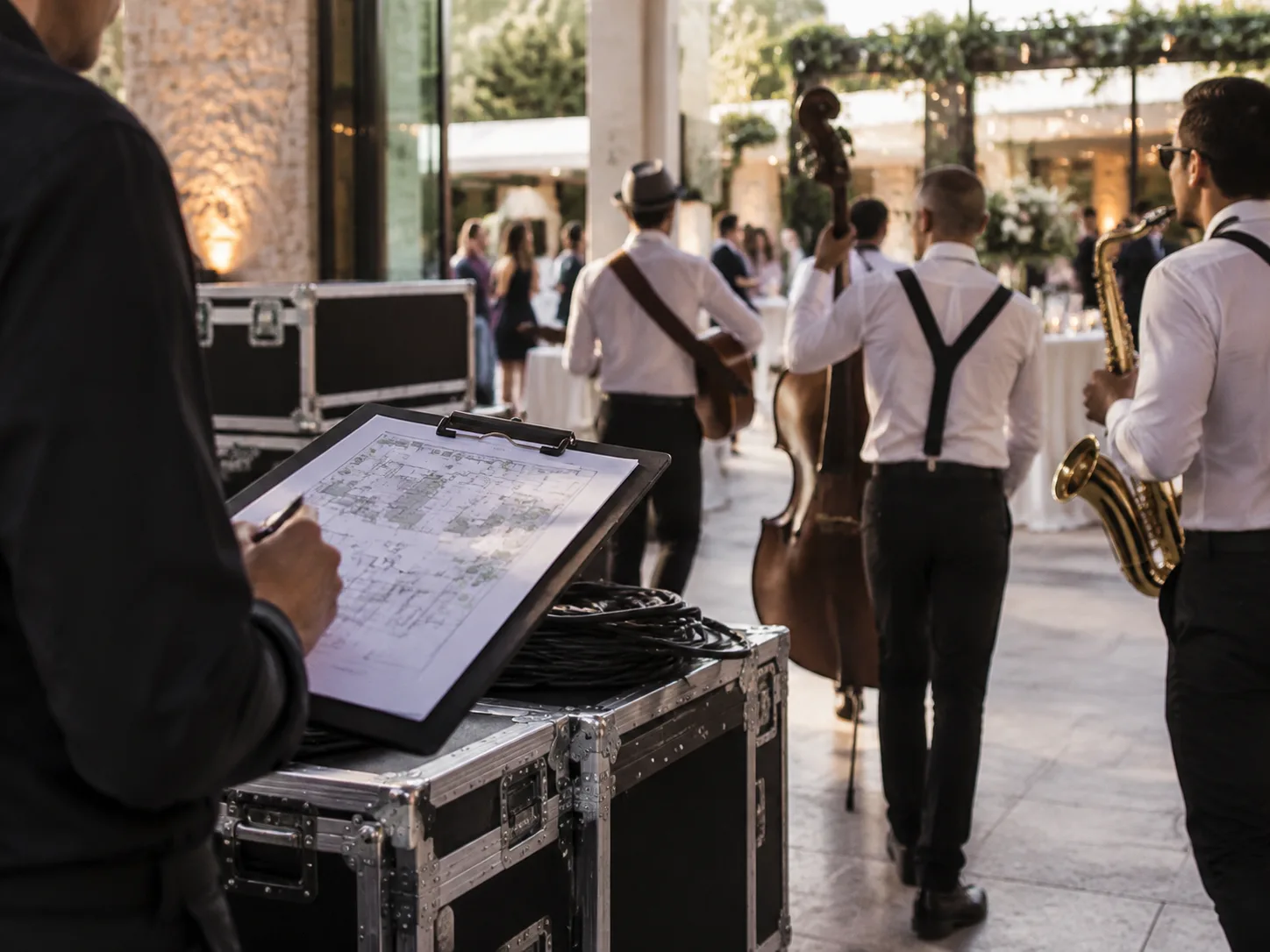
Red flags when hiring a roaming band include vague communication, limited live performance footage, unclear pricing, missing backup plans, incomplete technical details, and weak written terms. Spotting these warning signs early helps you compare bands more confidently, protect the guest experience, and choose performers who can move naturally through your event. This guide explains what to check before you contact or confirm a band directly.
Why Red Flags Matter for Roaming Live Music
Roaming bands operate in fluid, public, and often unpredictable environments. Unlike a stationary stage band that can arrive, set up, and monitor sound from a fixed position, roaming performers move through crowds, adapt to venue flow, and interact closely with guests. That flexibility creates unique logistics and greater dependence on realtime decision-making, which means even small gaps in planning can compromise an event. Identifying these warning signs reduces the chance of poor guest experience, unexpected costs, or safety incidents. A proactive review of communication, technical needs, legal protections, and contingency planning turns subjective impressions into objective checks that protect your event investment.
Communication Signals to Check Early
Slow or inconsistent responses
Timely, consistent communication is a practical indicator of reliability. If initial queries require multiple follow-ups, answers come only after days, or the band avoids committing to details like arrival time or set length, that’s a warning. Reliable bands typically respond within business hours, provide clear replies to logistical questions, and confirm next steps in writing. Delays can mean understaffing, poor organization, or a lack of systems for client coordination.
Vague answers and evasive language
Avoid vendors who answer specific questions with broad statements such as “we’ll handle it” without listing how. When you ask about amplification, space needs, or quiet moments between sets, you should receive precise information: exact equipment used, typical footprint while roaming, and how they manage volume. Evasive language about pricing, cancellation policies, or insurance should trigger follow-up and require written clarification before any deposit changes hands.
Unclear point of contact
Having a single, named point of contact who handles scheduling, tech riders, and day-of coordination matters. If multiple people answer different parts of your conversation with contradictory details, that is a logistical risk. Ask directly for a dedicated coordinator or lead performer who will be present on the event day and confirm that name in writing.
Performance Evidence: What Real Footage Should Show
Poor or edited footage
Many bands use highlight reels or polished videos that mask real-world conditions. Red flags include footage with studio overlays, clips that look heavily edited, or videos that lack ambient sound and audience interaction. For roaming bands you want uncut or minimally edited clips that show the group performing while moving through a crowd, mixing with guests, and reacting to ambient noise. If a band cannot provide at least one full-song clip recorded at a live event, ask why; their explanation will tell you whether they perform regularly in similar settings.
If you cannot see the band live before your event, use this guide on how to vet a roaming band to review footage, audio, references, technical documents and communication quality before making your decision.
Limited or non-specific setlists
Roaming bands typically adapt song choice to guest demographics and event flow. If a band cannot provide examples of flexible setlists or refuses to discuss how they read a crowd, consider it a sign they may not handle unexpected moments well. Well-organized acts can provide sample set rotations, key transitions, and examples of how they create peaks and low-energy moments during a reception or corporate walkabout.
Pricing, Deposits and Written Terms
Inconsistent pricing explanations
Confusion about fees is one of the most common complaints after events. Transparent pricing covers flat performance fees, travel or parking surcharges, overtime rates, equipment fees, and deposit/refund policies. If a quote changes significantly during negotiation, or if the band says “final price depends on details” without defining which details, you should request a written itemized quote. Ask for a sample contract or terms sheet that includes exact amounts and triggers for additional charges.
Vague deposit, cancellation, and refund terms
Deposits secure dates; cancellation terms protect both parties. Red flags include undefined refund windows, unclear conditions under which deposits are forfeited, or no statement about postponement options. A fair agreement specifies deposit amount, timelines for refund eligibility, and how rescheduling is handled. If the band resists providing these terms in writing, you may face difficulties if unexpected changes occur.
If pricing, deposits, cancellation terms or technical responsibilities are unclear, compare the proposal against a practical roaming band contract checklist before sending a deposit.
Missing or incomplete technical riders
Roaming bands differ from stationary acts in their technical demands. A technical rider should list preferred amplification type (battery-powered PA, instrument DI, acoustic-only), number of performers, number and size of cases for load-in, power needs if any, and staging constraints (e.g., need for a clear path of 1.2 meters for moving between areas). Vague or absent technical riders are a strong red flag for last-minute problems and unexpected venue requirements.
Backup Plans, Insurance and Practical Protections
No backup musician or plan for absence
Musicians fall ill, instruments break, and travel delays happen. Reputable roaming bands maintain standby plans: alternate musicians on call, simplified acoustic sets for reduced personnel, or the ability to adjust performance length. If a band says simply “we’ll figure it out” with no concrete fallback, plan for that shortfall by asking how they will cover sickness, missed flights, or gear failure.
Absence of liability insurance and documentation
Venues and event planners often require proof of public liability or general liability insurance. Bands without insurance or unwilling to share a certificate are increasing risk for both the client and venue. Ask for a copy of their insurance certificate and verify the coverage amounts. If the band lacks insurance, discuss whether the venue’s policy covers performers as an interim step, or consider requiring a rider in the agreement that addresses this gap.
Contract terms that limit your remedies
Be wary of contract clauses that severely limit cancellation remedies, include broad indemnity for unspecified claims, or require arbitration in distant jurisdictions. While many performers use standard contracts that favor them, you can negotiate reasonable terms: cap liability, define force majeure with clear examples, and require the band to maintain minimum insurance levels. If a band refuses to negotiate basic protections, consider it a practical warning sign before moving forward.
Technical requirements and setup concerns
Unclear amplification and power requirements
Roaming acts vary: some perform acoustically, some use portable battery-powered systems, and others rely on venue power. Red flags include vague statements like “we’ll bring our PA” without specifying battery vs mains power or power draw. Get precise answers: wattage of the PA, number of microphones, battery life if used, recharge time, and how they plan to manage sound levels in confined indoor venues. Lack of clarity increases the risk of technical failure and neighbor or venue complaints.
No plan for environmental constraints
Outdoor events introduce weather, dust, and lighting variability. Bands should state how they protect instruments, how they handle rain or wind, and whether amplification will be adjusted for ambient noise. If the band lacks weather protocols or says “we’ll adapt” without documented steps, predict higher operational risk. Ask for a written contingency plan for common environmental scenarios.
Logistics that don’t match venue realities
Roaming performance requires clear pathways, load-in access, and space for performers to assemble. Red flags include a refusal to coordinate with venue staff about access points, parking requirements, or timings. Request a short site visit or at minimum a written confirmation of load-in route and staging areas. If a band cannot or will not coordinate these details, expect friction on the event day.
Guest Interaction: Comfort, Boundaries and Event Fit
Pushing inappropriate interaction
Roaming performers should read the room and respect personal boundaries. A red flag is a band that describes aggressive engagement tactics or implies performers will pressure guests to participate. Ask for examples of how they create interaction while maintaining comfort, and request a sample script if you are concerned about family-friendly environments. Bands with experience will outline tone and approach for different audiences.
Excessively rehearsed “staged” moments
While choreography can enhance a performance, roaming bands that insist on rehearsed stunts requiring guest involvement or rehearsal time at the venue increase disruption. For weddings or formal dinners, prioritize bands that offer spontaneous, guest-friendly interactions rather than forced participation that can make guests uncomfortable.
Practical Checklist Before Hiring a Roaming Band
Understanding how to avoid bad live band bookings starts with documentation and clear expectations. Use a short checklist during selection and confirmation:
- Written itemized quote and contract.
- Sample live footage of roaming performances.
- Technical rider with exact equipment and power needs.
- Backup contingency for illness and gear.
- Proof of insurance and cancellation terms.
- Named day-of contact.
- Written arrival, setup, and breakdown timelines.
Each of these items reduces uncertainty and allows you to compare offers objectively.
Pre-booking questions to always ask
Ask direct, closed questions and require written answers: Do you have public liability insurance? Can you provide an unedited clip of a roaming set? What is your overtime rate? How do you handle illness or travel delays? What are your exact power requirements? Bands that refuse to answer or provide written confirmation are creating avoidable friction and are signaling potential issues.
Before you move forward, prepare a clear list of questions to ask before booking a roaming band so you can compare communication, technical needs, repertoire flexibility and event fit consistently.
Sample confirmation checklist for the week before
Seven days before the event, reconfirm: arrival time and parking plan, final set lengths and playlist preferences, the name and mobile number of the lead performer, and an emergency contact. Ideally, get a signed confirmation that restates key contract terms. This shortlist helps reduce last-minute surprises and gives you a clearer way to compare bands before the event.

Create Memorable Events with Live Music That Moves
Discover roaming bands that perform among your guests, create interaction, and elevate weddings, private parties, and corporate events. Explore your options and contact the right band today.
On-the-day coordination: what to confirm
Arrival, staging, and timing
Make sure arrival windows, set-up time, and breakdown timing are explicit. Roaming bands typically need less physical staging but more buffer to move between zones. Confirm where performers will enter, where instruments and equipment will be stored when not in use, and who will be present from your team to manage access. Clear timing prevents performers from arriving too early or being rushed later in the schedule.
Volume management and guest comfort
Discuss volume expectations for different parts of the event—ceremony, cocktail hour, dinner, dancing—and ask for approximate decibel ranges if possible. Bands should describe how they adapt volume during speeches or quiet moments, whether they can step back to provide acoustic accompaniment, and whether they can use lower-output configurations for indoor or intimate settings. If a band cannot meet your volume requirements, plan alternatives or designate quiet zones.
Venue coordination and permissions
Some venues require performer credentials, proof of insurance, or permit fees. Confirm the band will coordinate directly with venue management about arrival access, parking permits, and any location-specific rules. If the band refuses to liaise with venue staff or to provide requested documents, anticipate friction on the day and consider it a red flag when hiring a roaming band.
Examples of real-world problems and how they were prevented
Case example A: A mid-sized wedding hired a popular roaming trio who provided only studio footage. On-site, their battery PA ran out mid-set because their quoted “battery-powered PA” was a different model with shorter life. The couple had not requested a battery life guarantee.
- Preventive action: ask for battery life specifications and require a clause that the band will provide mains power or backup batteries for the full contracted performance duration.
Case example B: A corporate reception booked an act without confirming insurance. The venue requested a certificate two days before the event, but the band did not have one and postponed providing it. The event owner had to sign a venue indemnity form at the last minute.
- Preventive action: always require proof of insurance at contract signing and add a clause stipulating the band must provide a certificate no later than X days before the event.
Case example C: An outdoor festival did not confirm weather protocols and the band arrived unprepared for gusty winds that damaged a windscreen and forced an early finish.
- Preventive action: request a written weather contingency that specifies which conditions trigger a reduced set, a cover for instruments, and how refunds or rescheduling are handled.
Quick comparison of common red flags
| Area | Red flag | Practical check |
|---|---|---|
| Communication | Delayed or evasive replies | Request written confirmation and a named contact |
| Performance evidence | No live roaming clips | Ask for at least one unedited live recording |
| Logistics & tech | Vague technical rider | Require exact power and equipment specs in writing |
Negotiation tips and contract language to request
When negotiating, focus on measurable items: exact arrival time, maximum set lengths, specific fees for overtime, battery or mains power guarantees, and the requirement for proof of insurance. Include a clause describing what constitutes a force majeure (for example: natural disasters, official venue closure, travel bans) and the process for rescheduling or refunding deposits. If a band offers a discount for payment in full, ensure the discount and refundability terms are clearly stated. Good contract language reduces ambiguity and sets expectations that both parties can reference if disputes arise.
Sample clause for backup musicians
Include a short clause: “If the primary performer is unable to attend due to illness or travel interruption, the band will provide an equally experienced substitute or reduce the fee proportionally. The client will be notified at the earliest practical time and given the option to accept the substitute or cancel with refund per the cancellation schedule.” This type of clause protects you and helps verify whether the band has reasonable contingency plans.
Event-Day Checklist for a Smoother Roaming Band Performance
- Confirm arrival time and parking logistics 7 days prior.
- Obtain final playlist preferences and no-play lists.
- Get the lead performer’s mobile number and emergency contact.
- Verify certificate of insurance is on file with the venue.
- Agree on volume limits and times for lower-volume sets.
- Request backup battery or mains power confirmation.
Using this checklist reduces the chance of surprises and gives you a simple step-by-step approach to compare bands with more confidence.
Create Memorable Events with Live Music That Moves
Discover roaming bands that perform among your guests, create interaction, and elevate weddings, private parties, and corporate events. Explore your options and contact the right band today.
Choose With Confidence, Not Assumptions
The most useful red flags when hiring a roaming band are the ones that help you turn uncertainty into clear questions. Vague communication, limited live footage, unclear pricing, missing backup plans, weak documentation and incomplete technical details do not always mean a band is unsuitable, but they do show where you need more clarity before moving forward.
A strong decision comes from comparing evidence, confirming expectations in writing and choosing performers who fit the tone, movement and guest interaction you want for your event. Use Roaming Band as a starting point to explore profiles, compare styles and contact bands directly, while confirming availability, terms and final details with the performers themselves.
FAQs About Hiring a Roaming Band Safely
? How do I measure a roaming band’s audience engagement?
Audience engagement should be evaluated by looking at how naturally the band interacts with guests, moves through the space, adapts volume, and responds to the energy of the room. For roaming bands, strong engagement is not about forcing participation, but about creating moments that feel spontaneous, comfortable and memorable.
- Example: During a cocktail hour, guests pause, smile, sing along briefly or move closer to the performers without being pressured to participate.
- Recommendation: Ask for live footage that shows real guest interaction, not only polished promotional clips, and check whether the band’s style matches the tone of your event.
? When should I book a roaming band relative to the event date?
The ideal booking window depends on the event date, season, location and complexity. Smaller private events may allow a shorter timeline, while high-season weddings, corporate events and destination celebrations usually require earlier outreach.
- Example: A couple planning a peak-season Saturday wedding may have fewer choices if they start contacting bands only a few weeks before the event.
- Recommendation: Begin outreach as soon as your date is confirmed, compare availability directly with bands, and confirm terms in writing before paying a deposit.
? What cost components should I expect for a roaming band?
Typical cost components include the performance fee, travel, parking, equipment or PA needs, overtime, deposits and any special requests such as custom arrangements. The key is to understand what is included before comparing quotes.
- Example: A private client assumes parking and permits are included, then later receives additional charges from the venue or performer.
- Recommendation: Request an itemized quote that lists included services, possible add-ons and what would trigger extra fees.
? How do I verify references and avoid fake social proof?
Social media and reviews can be helpful, but they do not replace specific references or real performance evidence. Stronger proof includes recent client references, unedited live footage, venue experience and clear communication.
- Example: A planner contacts a reference and discovers the testimonial came from a collaborator, not from a comparable client event.
- Recommendation: Ask references specific questions about punctuality, guest interaction, volume control, professionalism and whether the band followed technical requirements.
? What should I expect for permits and insurance responsibilities?
Permit and insurance responsibilities depend on the venue, location and performance setup. Many venues request proof of public liability insurance, performer credentials or permits for amplified sound.
- Example: A venue asks for insurance documentation shortly before the event, but the band cannot provide it in time.
- Recommendation: Confirm venue requirements early and ask the band directly for any insurance certificates, permits or documents that may be needed before the event date.